This site has limited support for your browser. We recommend switching to Edge, Chrome, Safari, or Firefox.

AGTA Spectrum Award Winner · Newport Beach Atelier

Cart 0

Congratulations! Your order qualifies for free shipping You are $2,500 away from free shipping.
Sorry, looks like we don't have enough of this product.

Pair with
Add order notes
Is this a gift?
Subtotal Free
View cart
Shipping, taxes, and discount codes are calculated at checkout
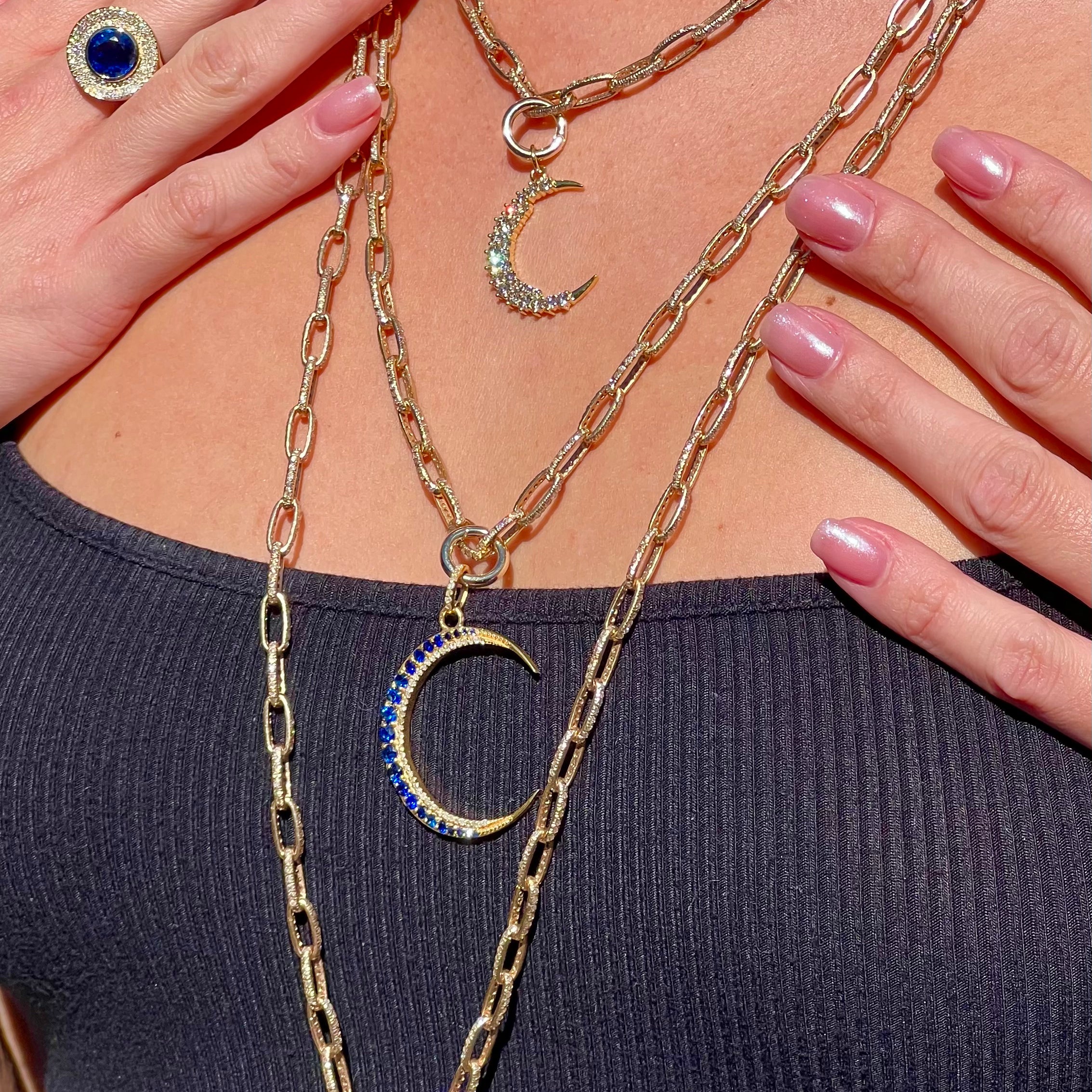
Elyzian vibrant blue sapphire and diamond necklaces layered on neck, handpicked gemstone fine jewelry

Blue Sapphire Jewelry

Exceptional blue sapphire jewelry, from cornflower to royal blue. Our collection showcases the finest blue sapphires in rings, necklaces, and earrings, each one selected for color saturation and brilliance. Kashmir and Ceylon sapphires are sourced on request for a custom commission.

Blue Sapphire Jewelry in Cornflower and Royal Blue

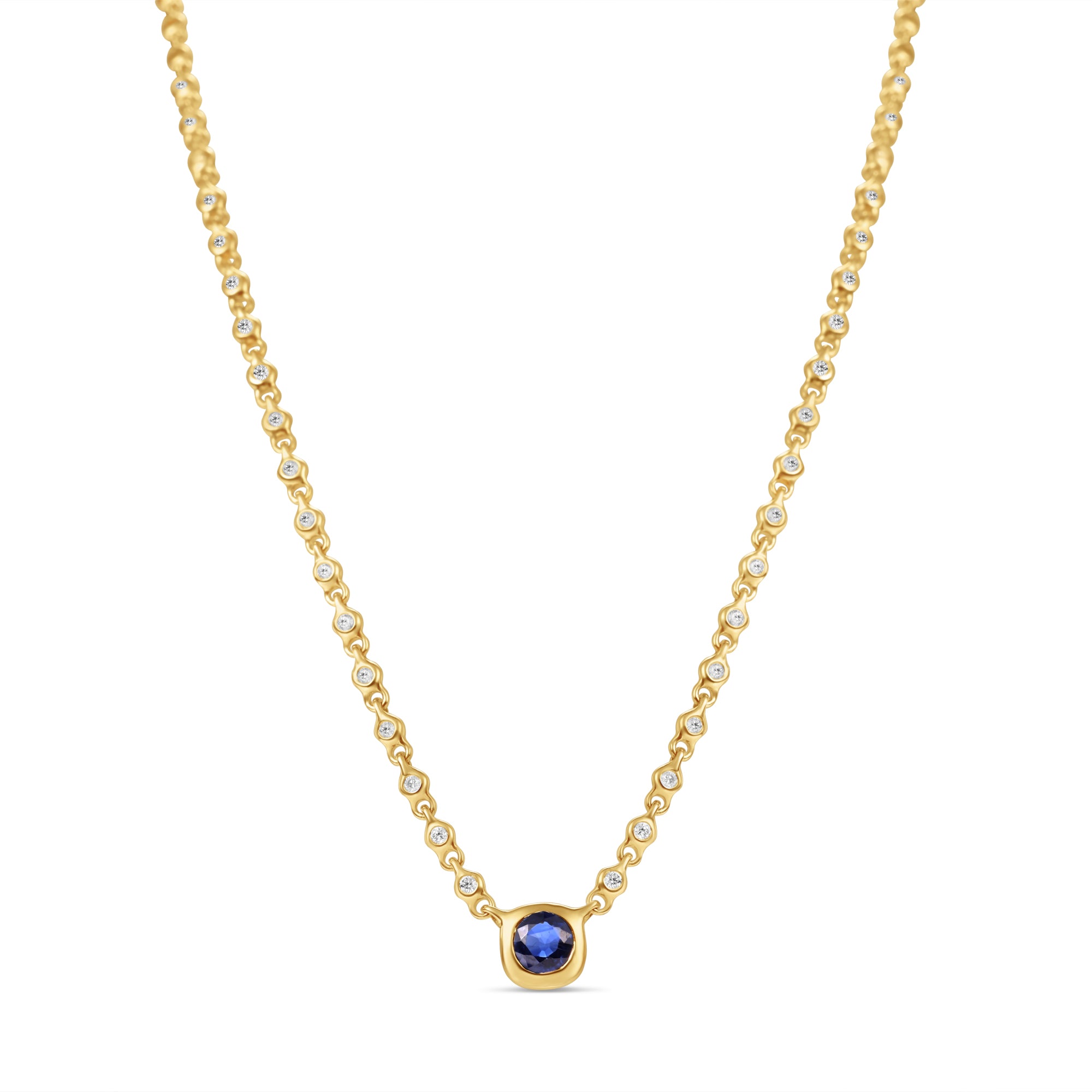
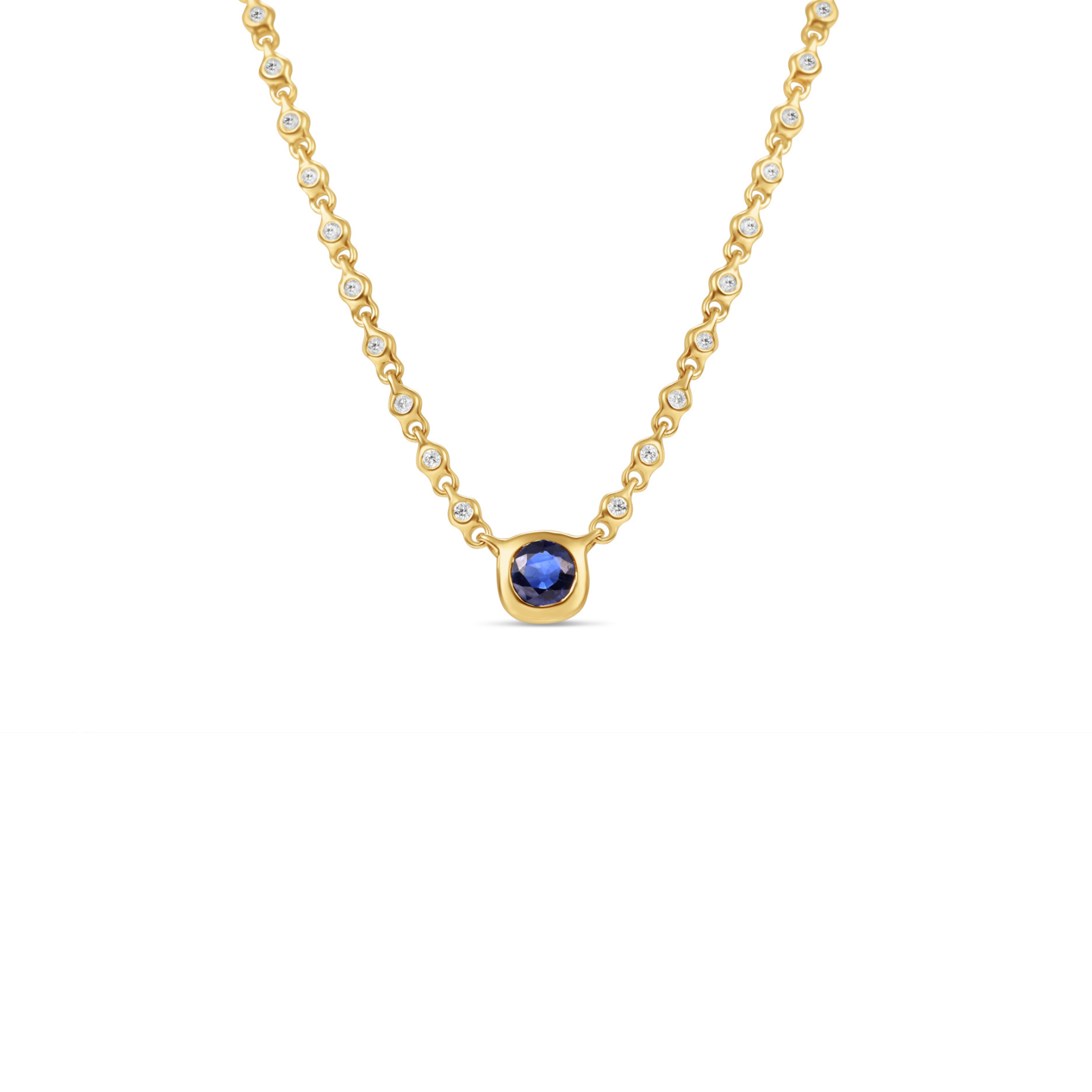
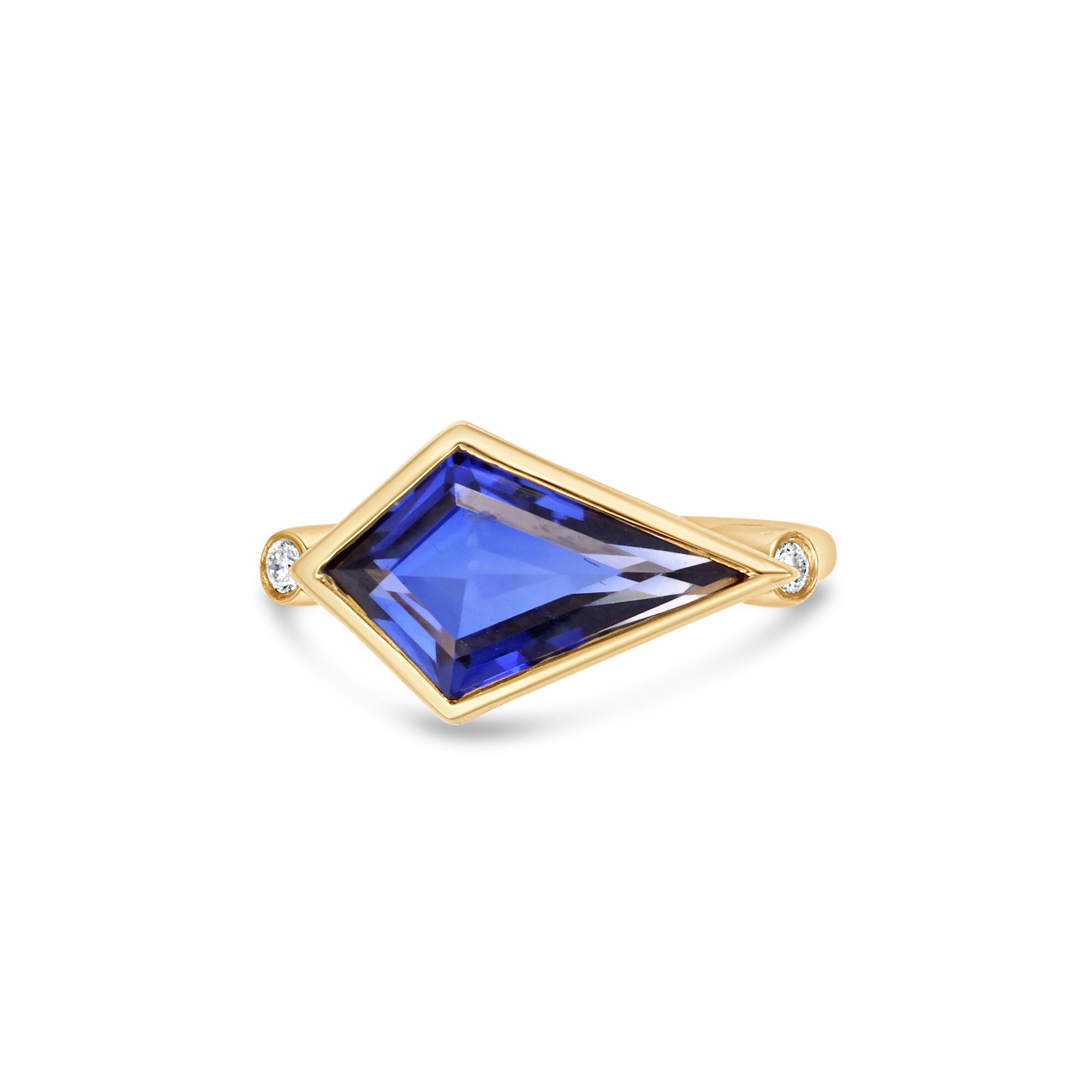
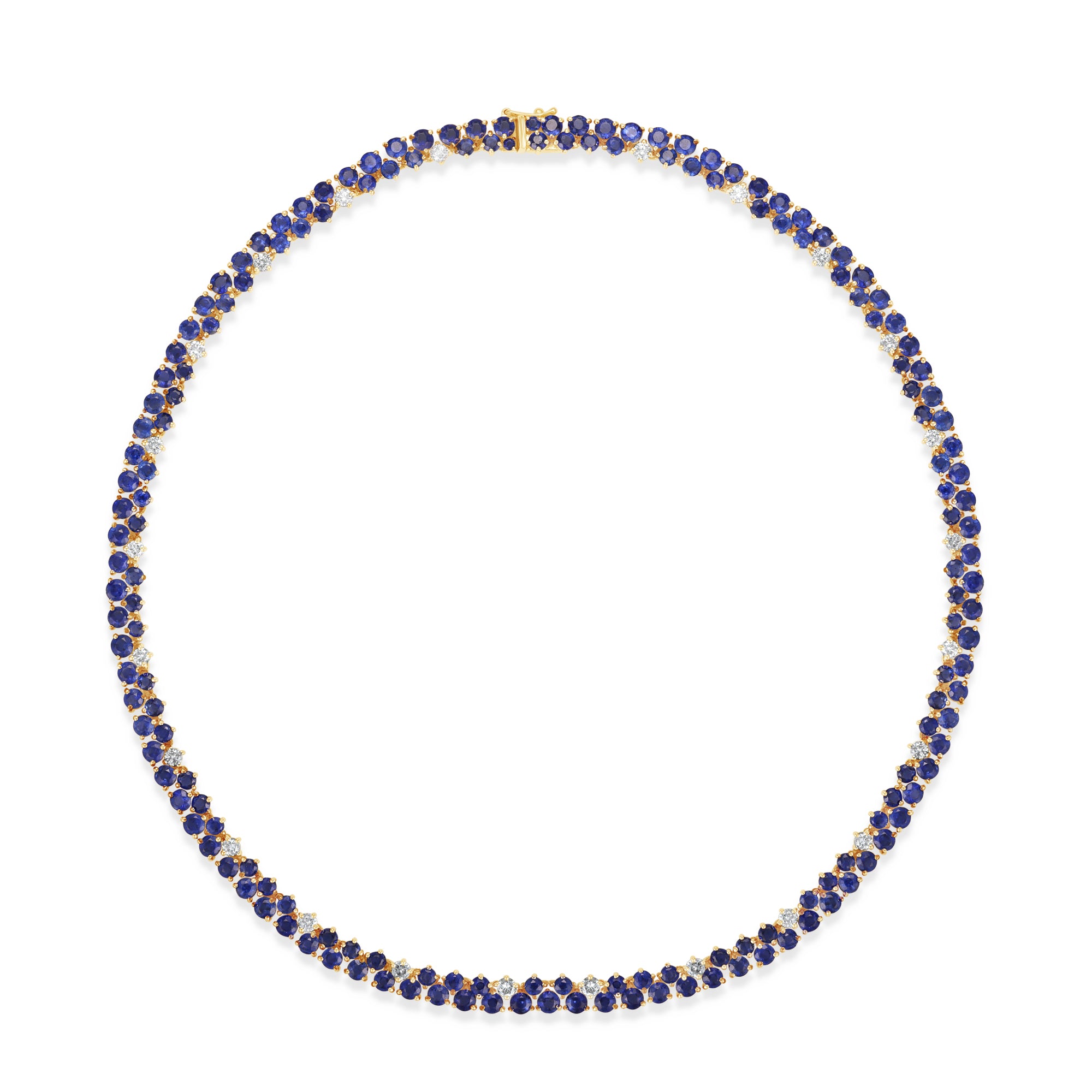
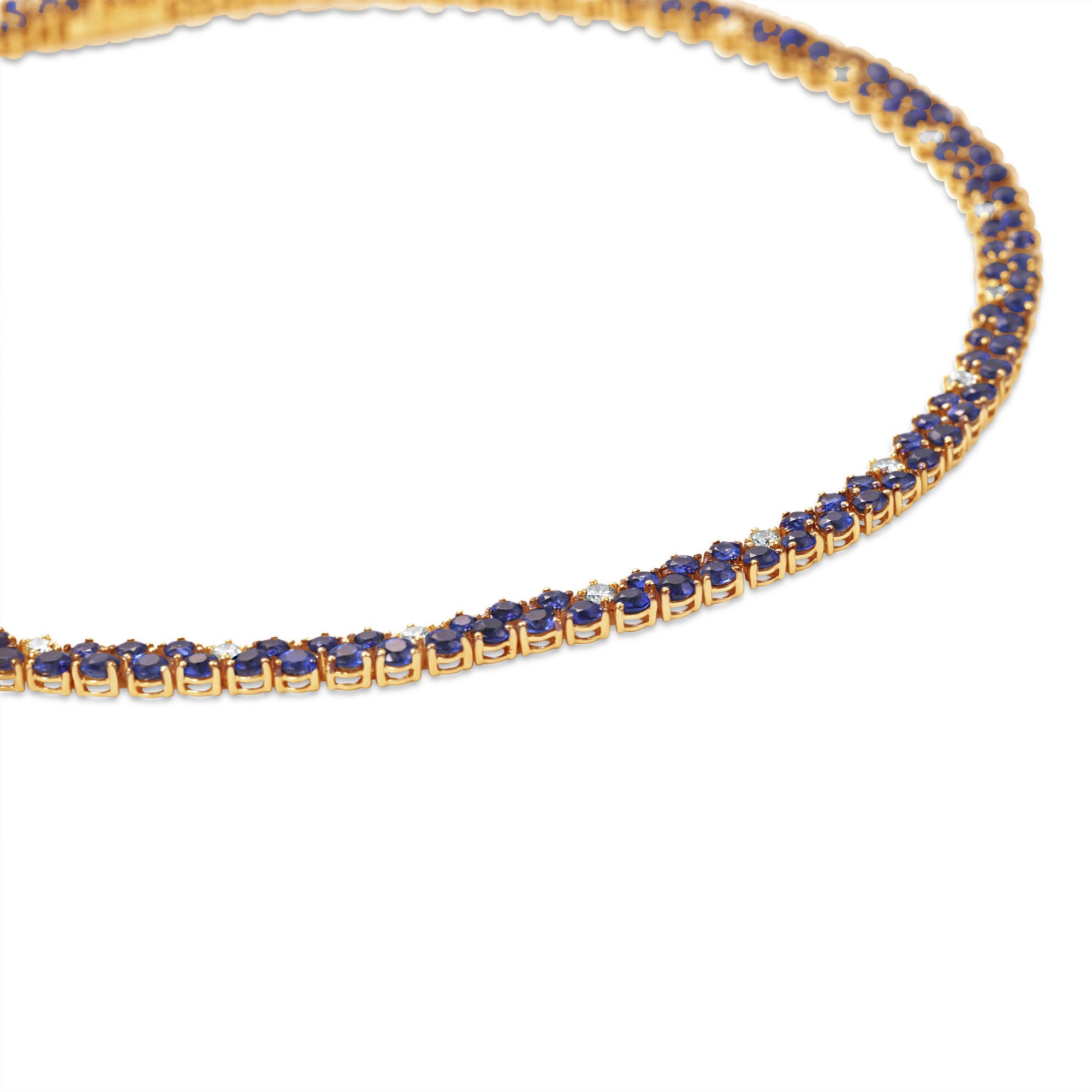
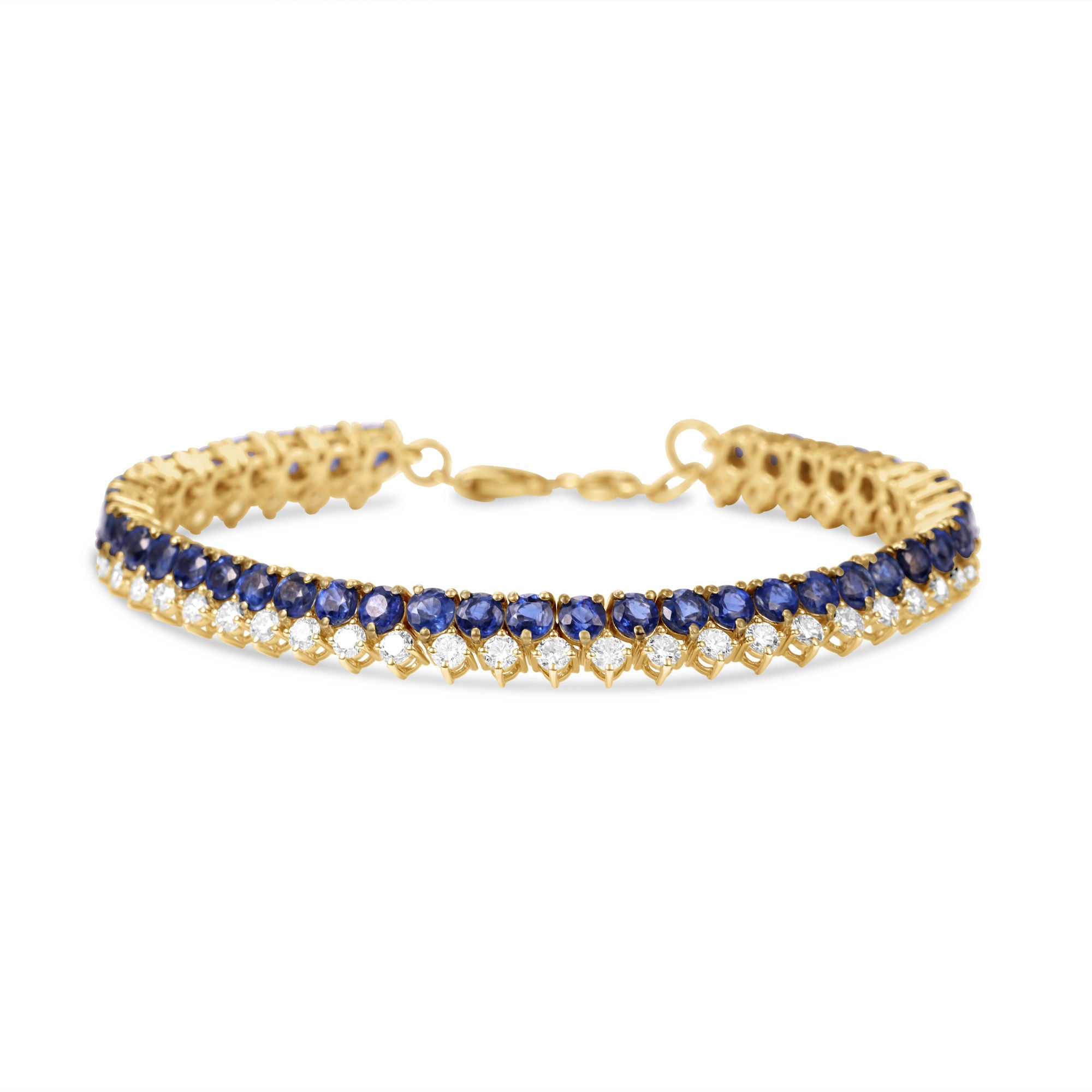
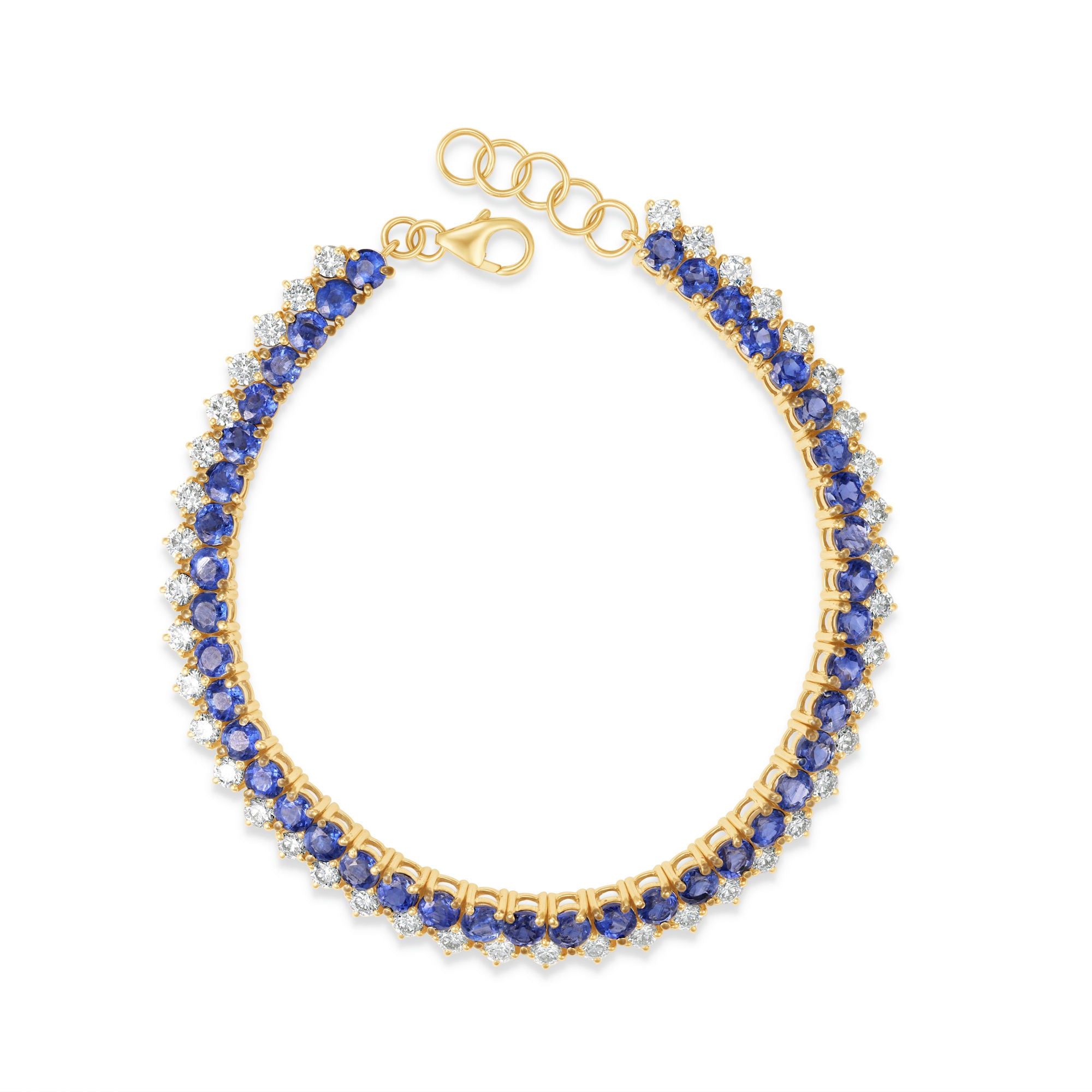
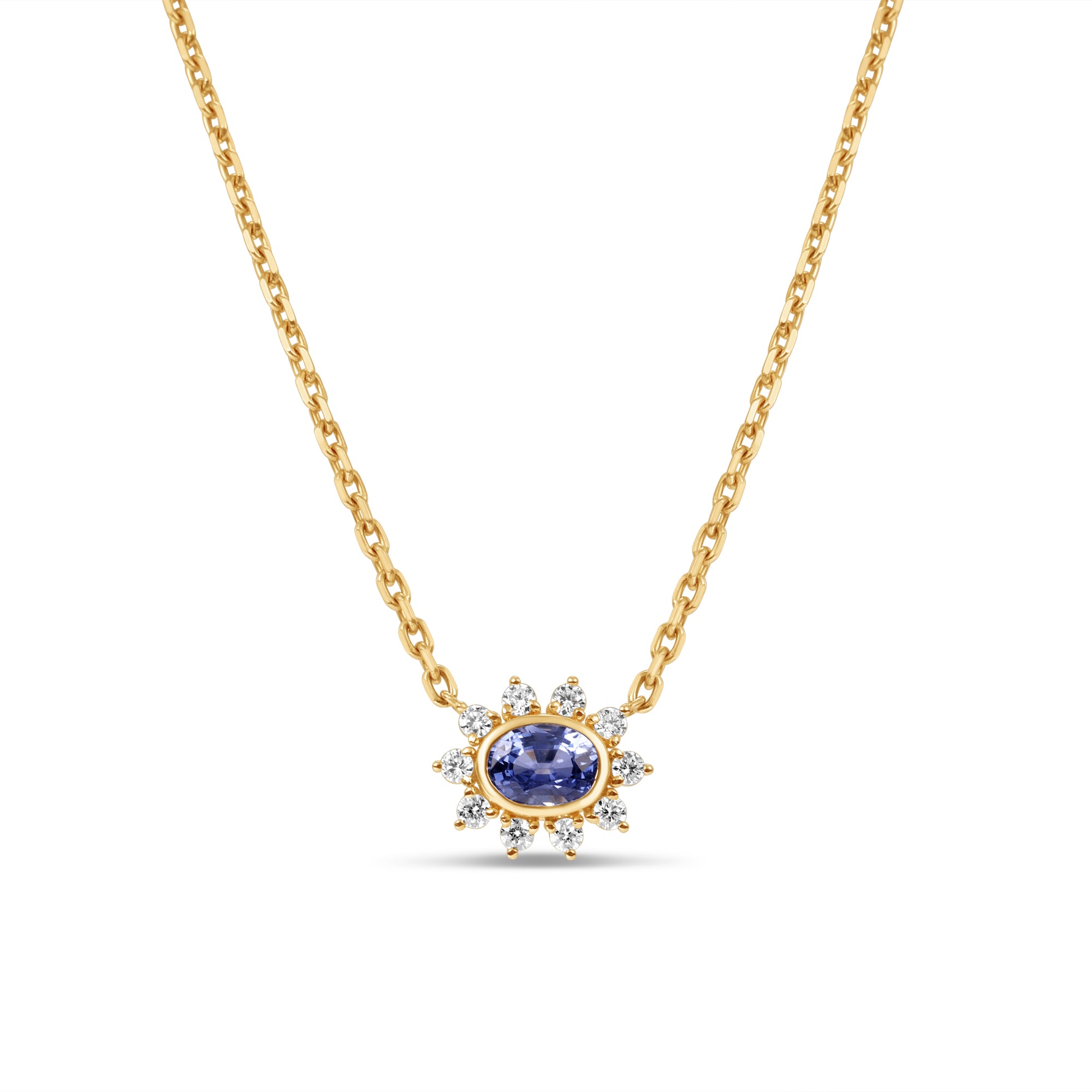
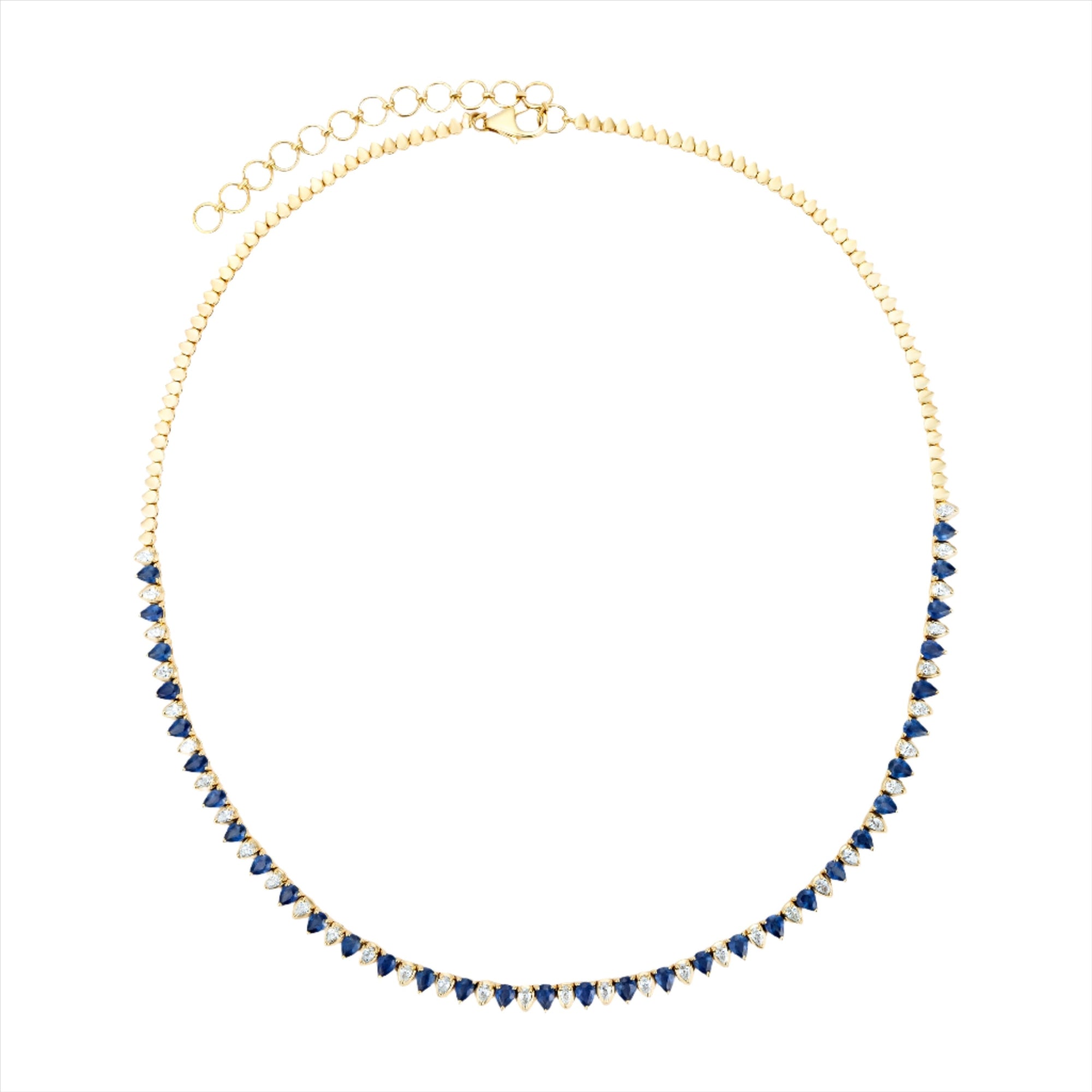
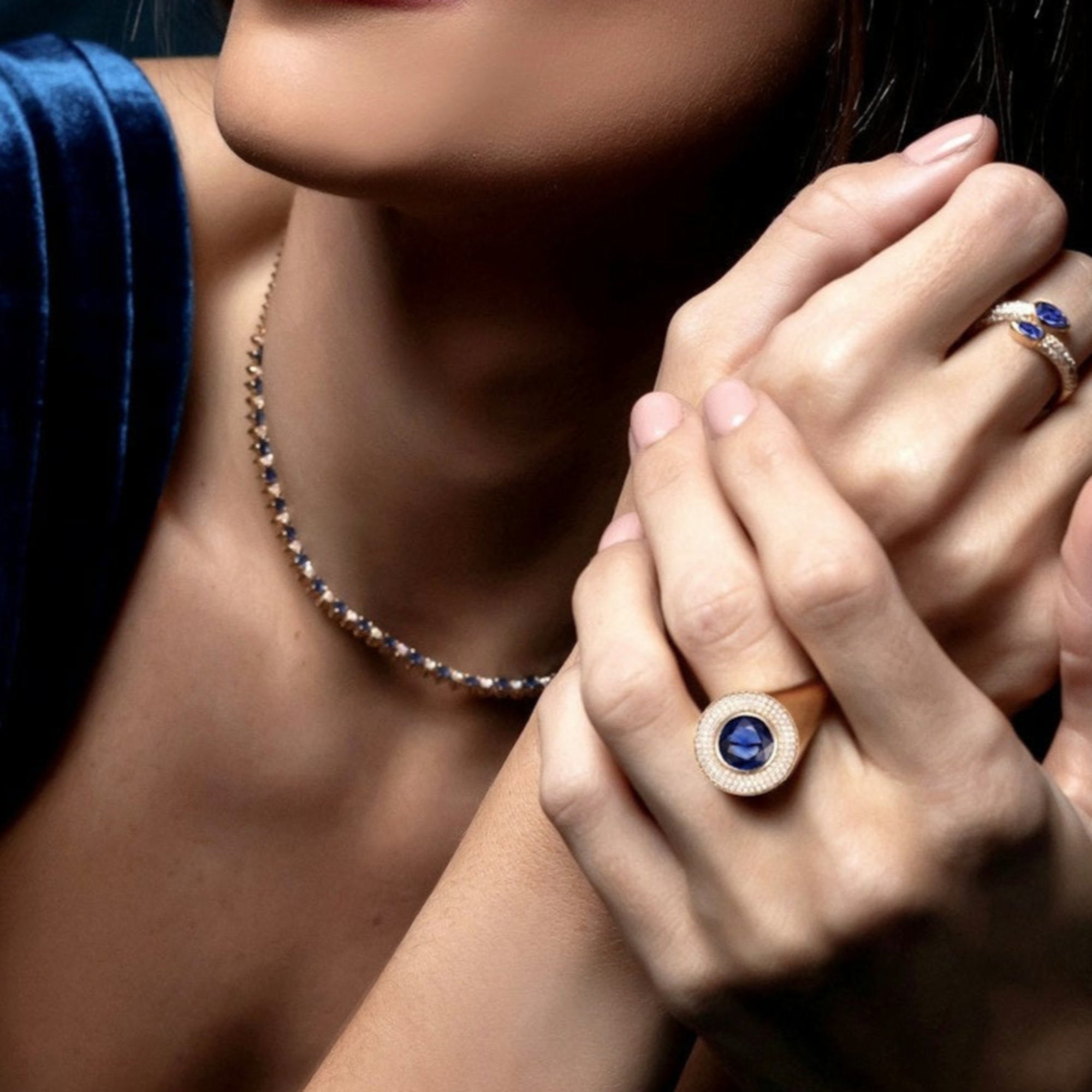
Blue sapphire is graded against two legends. Kashmir blue, the velvety cornflower of mines exhausted a century ago, and Ceylon blue, the bright, luminous mid-blue Sri Lanka has produced for two thousand years. Those are the blues we hunt, and this collection wears them. A flexible woven cuff set with cornflower blue sapphires. A tennis necklace carrying close to forty carats of blue. Teardrop sapphires on a diamond line. A kite-cut stone in 18K gold. A serpent bypass, an anemone pendant, a crescent moon in sapphire and diamond. Most pieces pair the blue with diamonds in 14K gold. And in the vault sit loose heart-shaped sapphires, natural and unheated with known origin, waiting for a commission. Blue first. Always.

Blue Sapphire Jewelry: Frequently Asked Questions

What makes Kashmir sapphires so valuable?

Scarcity and a color nothing else quite makes. The Kashmir mines produced for only a few decades in the late 1800s before running dry, and their stones carry a velvety, sleepy cornflower blue caused by fine silk inclusions that soften the light. At auction, fine Kashmir sapphires have brought more than $200,000 a carat. Today the name mostly describes that color, and when we grade blue, velvet cornflower is the reference point.

What is a Ceylon sapphire?

A sapphire from Sri Lanka, the island the trade called Ceylon, which has produced fine sapphires for over two thousand years and still does. Ceylon blue runs brighter and more luminous than the darker royal blues, a mid-blue that holds its light indoors. It is the living classic of the sapphire world.

Are blue sapphires heat-treated?

Most are, and honestly so. Heating a sapphire to bring out its best blue is a permanent practice the trade has accepted for centuries, and nearly every blue sapphire in fine jewelry has had it. The rarer thing sits in our vault: loose heart-shaped sapphires, natural and unheated with known origin, kept for custom commissions. Ask and we will show you.

Is sapphire good for everyday wear?

Yes. Sapphire is a 9 on the Mohs hardness scale, second only to diamond, which makes it one of the most durable colored stones you can wear daily. It is also the September birthstone, though a blue this good refuses to wait for September. Warm water, mild soap, and a soft cloth keep it clean; skip ultrasonic and steam cleaners.

What should I look for in a blue sapphire?

Color, before anything. A fine blue sapphire holds its saturation in low light instead of going ink-dark, and reads alive rather than grey. Cut matters because it drives how evenly the color spreads across the stone. Carat weight comes last; a vivid two-carat stone beats a dull four-carat one every time. This is the order we buy in.